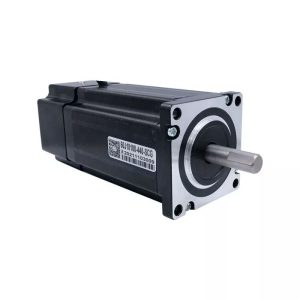
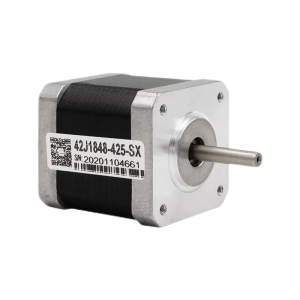
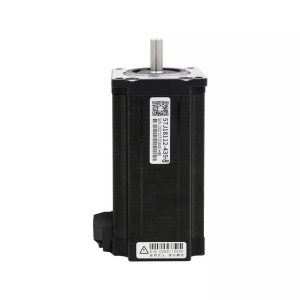
dm556 stepper driver

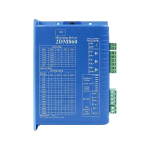
2 DM556 high torque output DC cnc driver matched with 57 86 motor
- Description
- Inquiry
Description
Introduction to stepper driver
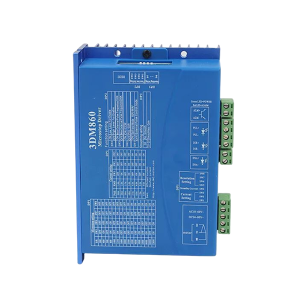
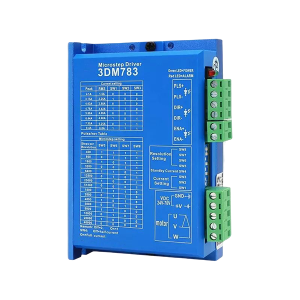
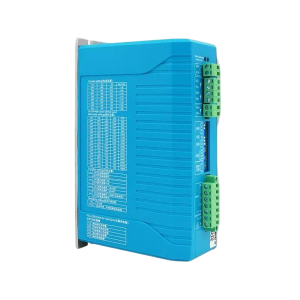
DM556 series products of digital stepper driver adopt 32-bit DSP processor, which can drive 42-130 full series of two-phase and three-phase stepper motors. For different motors, the optimal control parameters can be automatically generated to maximize the performance of the motor, so that the motor can achieve low vibration, low heat generation and stable low-speed operation.
2Phase stepper driver performance
- Medium and high speed torque compensation;
- Current vector control, high efficiency;
- Built-in acceleration and deceleration control to improve the smoothness of start and stop;
- Single and double pulse control mode can be selected;
- Motor running position memory;
- Input signal differential optocoupler isolation, compatible with 5-24V;
- Customizable microstep;
- Overcurrent protection, overvoltage protection;
- Automatic detection, flexible selection of pulse edge counting method;
- Green light means running, red light means protection or offline.
2Phase stepper driver 2 DM556 Specification
| Model | Phase | Micro step | Rated voltage | Output current | Dimension | Match motor |
| (A) | (mm) | |||||
| 2DM556 | 2 | 2~128,5~125 | DC(24V~60V) | 1.4~5.6 | 118×75.5×35 | 57/86 |
2Phase stepper driver 2 DM556 Mechanical Dimens
A stepper driver, also known as a stepper motor driver or stepper motor controller, is an electronic device or module used to control the motion of a stepper motor. Stepper motors are commonly used in various applications that require precise and controlled rotational or linear motion, such as 3D printers, CNC machines, robotics, and automated systems. The stepper driver plays a crucial role in converting electrical signals into precise mechanical movements by controlling the current supplied to the motor windings.
When selecting a stepper driver for a particular application, it’s essential to consider factors such as motor voltage, current requirements, microstepping capability, and communication interface compatibility. The choice of driver can significantly impact the overall performance and precision of the stepper motor system.